

Are You at Risk for Gout? Symptoms, Causes, Treatments & Prevention Tips
- Posted on
admin
- Categories: Health & Wellness

Gout is a type of arthritis that is caused by the formation of uric acid crystals near joints, causing acute pain. Understanding the symptoms of gout, its underlying causes, available treatment options, and tips for prevention can help you manage it better and avoid episodes of pain. Additionally, prevention of gout is considered better than treatment.
Gout is not a threatening condition, and it can be managed by medication and lifestyle changes. Medications and natural remedies are available for treating the condition. We will explore what is gout and how it can be managed.
Key Takeaways
- Gout is a painful disease that occurs repeatedly, but it can be managed with proper treatment and lifestyle changes.
- The risk factors of the condition include age, gender, genetics, lifestyle, and co-occurring diseases.
- Gout can be diagnosed by clinical assessment and laboratory tests, like blood tests, joint fluid analysis, x-rays, etc.
- Clinical gout treatment involves NSAIDs and colchicine.
- Natural remedies such as Amvatari Ras and Lakshadi Guggul are very effective.
- Prevention is better than a cure, and it is rooted in diet, lifestyle, and regular medical checkups.
Who Is More Likely to Develop Gout?
Some people are more likely to develop the condition, and this may be due to factors like gender, age, genetics, and lifestyle choices, as per studies. Men are more likely to develop the disease that too the chances increase from 30 years of age. Women, on the other hand, have increased chances after hitting menopause.
Family history is also a contributing factor, along with health conditions like obesity, high blood pressure, diabetes, heart and kidney diseases. Apart from this lifestyle choice like a diet dominated by red meat or sugar (fructose) and alcohol use also increases your chances of getting affected.
Spotting the early signs of gout is crucial to managing it before complications arise. Let’s explore the most common symptoms and what they look like.
Recognising the Symptoms
What Are Gout Symptoms?
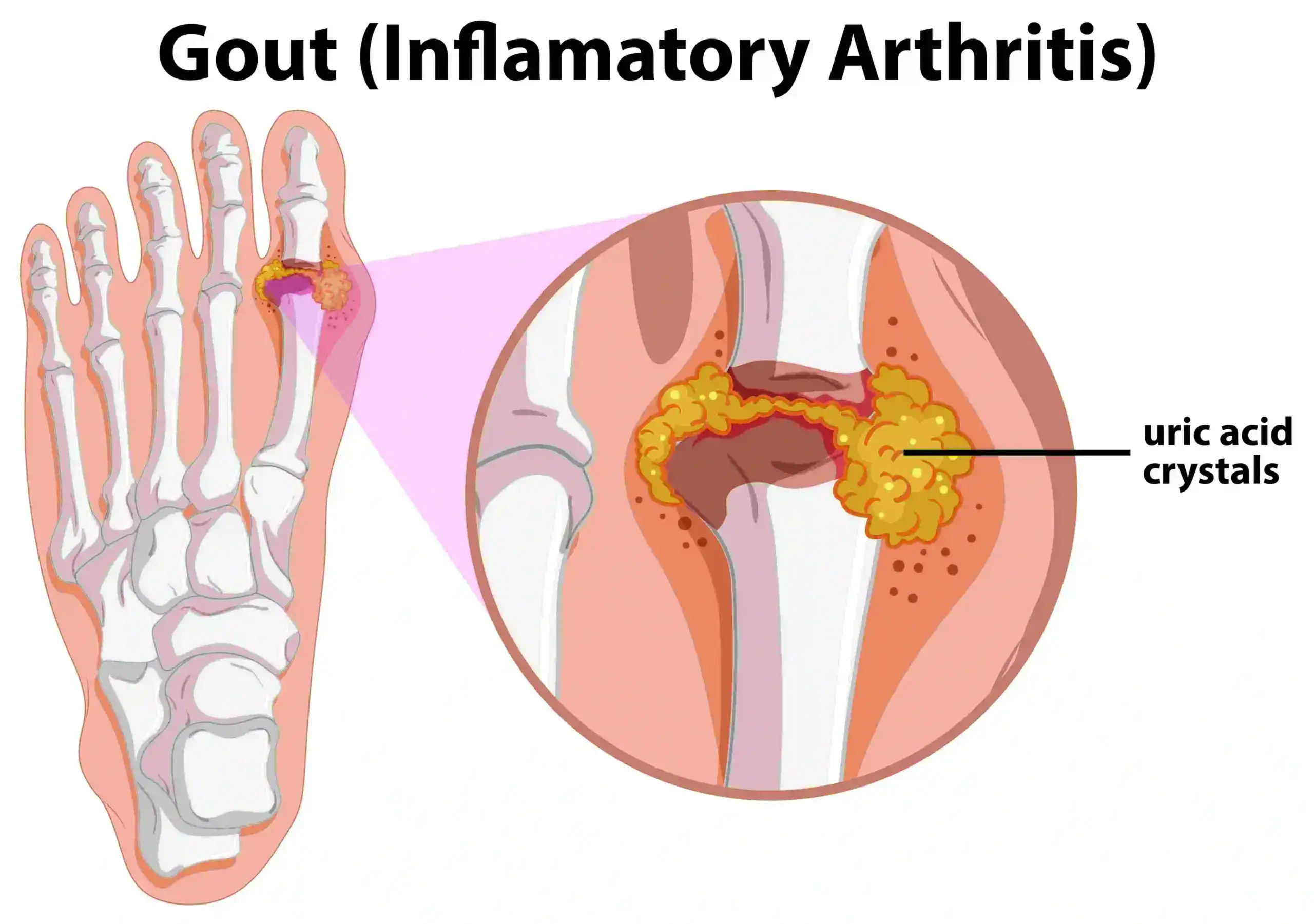
According to research, early stage gout symptoms include a sudden and severe pain in one or more bone joints. The joints of the big toe are usually the most affected area. It is also seen in the joints of the ankles, knees, fingers, wrists, and elbows. Affected areas are usually swollen with red, and tender skin tissue.
How Long Does a Gout Attack Last?
Sudden and severe pain caused by the condition is referred to as a gout attack or flare. The peak intensity of this pain can be reached in 12 to 24 hours. If it is not treated, then the symptoms can last for even a week.
Chronic Gout Signs
A more chronic condition of the disease is characterised by recurring flares that spread to multiple joints. This is usually accompanied by hardened uric acid deposits under the skin called tophi, leading to reduced motion in the joints.
Beyond knowing who’s at risk, understanding what causes gout and what may worsen it is key to long-term prevention.
Gout Causes and Risk Factors
Underlying Causes
As research indicates, the root cause of the disease can be linked to the increase in uric acid levels in the blood. The acid increases when the body produces more than required or the kidney fails to remove it fast enough. Production of the acid is directly related to the consumption of foods containing purine, such as red meat.
If someone in your family has had gout, your chances of developing it may be higher. Due to this, heredity is a risk factor for gout.
Lifestyle and Health Risk Factors
Food habits are one of the most common lifestyle gout causes. Food items containing high levels of purine are known to increase the uric acid levels in the body. Organ meat and certain seafood, like shellfish, are common sources of purine.
Another food category that leads to the risk of gout is sweetened foods. This is because of the high fructose content in such foods, which produces uric acid in the body through metabolism.
Diagnosing Gout
Clinical Evaluation
For diagnosis of the disease, doctors usually look for the above-mentioned symptoms along with the family background. If the doctor is convinced that the condition of the patient matches most of the gout symptoms, then a lab test will be prescribed.
The joints are carefully examined to distinguish them from other forms of arthritis. But a confirmation can only be given after the lab test.
Laboratory Tests
Multiple tests are available for diagnosis, and doctors usually prefer a combination of tests to accurately confirm the disease. X-rays, Ultrasound, MRI, or CT scan are used for imaging the affected area to identify joint damage or tophi.
Additionally, blood tests are used to identify the uric acid level in the blood. A joint fluid analysis can also be effective to confirm the presence of crystals.
Treatment Options
Treatment for gout is a combination of managing the pain during a flare using medication and taking medications to reduce the uric acid levels. So there are two types of drugs for gout medication, the short-term ones for reducing the pain of flares and the long-term ones for managing the acid levels.
Nonsteroidal Anti-inflammatory Drugs (NSAIDs) and febuxostat are some of the commonly used medications for gout treatment. The NSAIDs and colchicine are used as relief to relieve gout attacks. These medications provide immediate gout pain relief.
Other types of medications, like allopurinol and febuxostat, are used to reduce the uric acid levels in the body. Both types of gout medications can have side effects. Therefore, they should only be consumed under the prescription of a qualified doctor.
These side effects can sometimes be threatening; for instance, people with kidney diseases or stomach ulcers are not advised to take NSAIDs.
Natural Remedies for Gout
The potential risk of taking medication for gout can prevent many affected persons from taking proper treatment for gout. But you don’t have to worry, as certain natural remedies for the treatment of disease are as effective as the clinical medicines without the side effects..
Amvatari Ras:
Buy Now
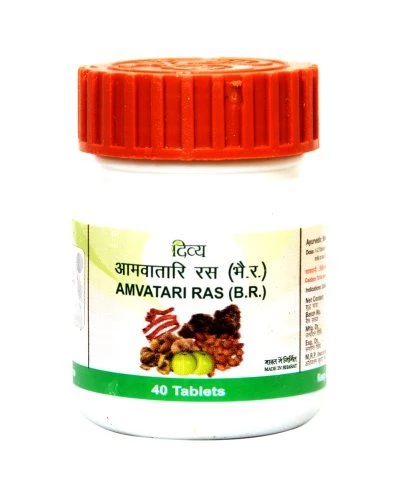
This is an ayurvedic natural remedy that is used in the treatment of arthritis conditions like gout. Formulated from ingredients like Shuddha Parada (Purified Mercury), Shuddha Gandhaka (Purified Sulphur), Chitraka Moola (Plumbago zeylanica), the medicine works through its detoxifying and tissue penetrating properties.
The medicine is known for providing joint lubrication, which leads to the regaining of mobility and flexibility lost due to gout. Consumption of the medicine within the allowed limits is proven to provide significant relief in reducing joint pain in several research experiments.
Lakshadi Guggul:
Buy Now
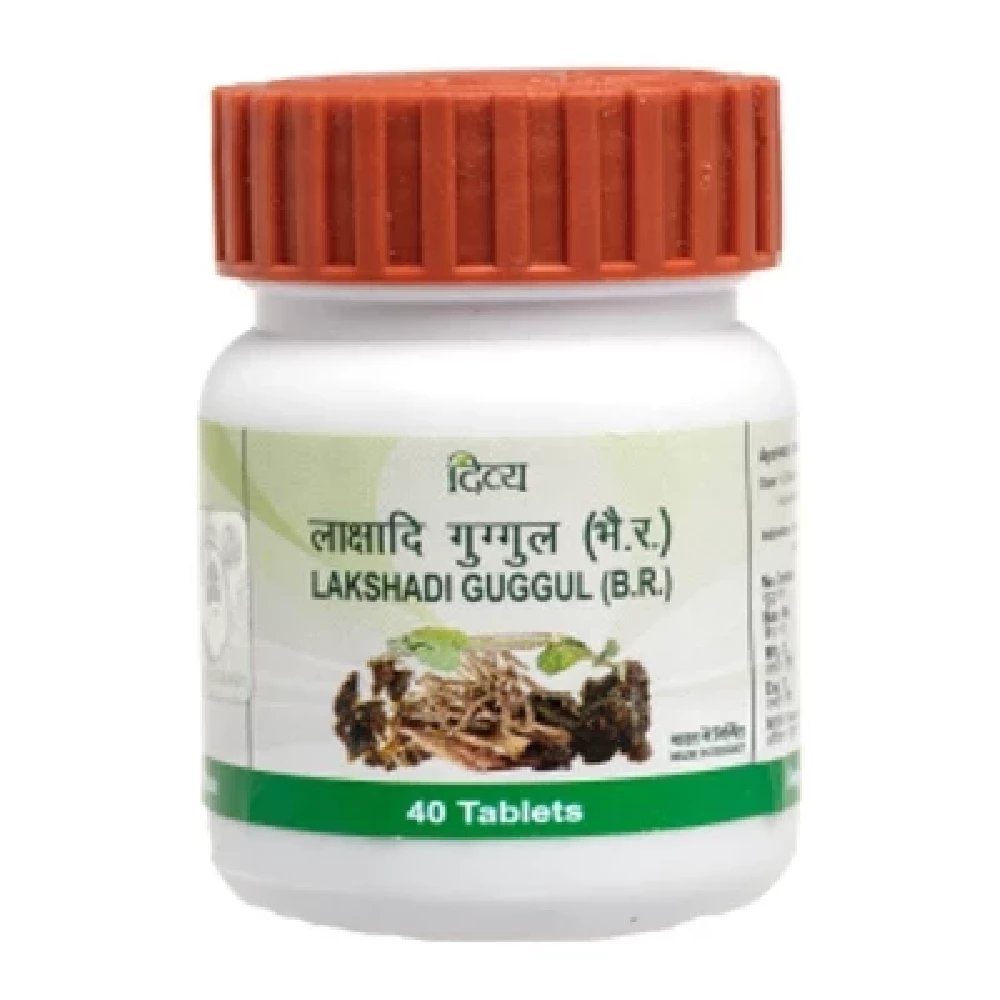
This is another natural remedy from Ayurveda that is used for treating bone-related issues. Made with ingredients like Laksha (Laccifer lacca), Asthisamhrut (Cissus quadrangularis), and Kakubha (Terminalia arjuna), the medicine is a rich source of calcium.
It is mainly used for osteoporosis, but it is also proven as an antiarthritic and chondroprotective medicine. It can also be consumed as a supplement for increasing bone strength and reducing general weakness that occurs as a result of aging.
Both of these natural remedies are excellent alternatives to the NSAIDs for reducing the pain of gout over the long term. There are also other gout medication in Ayurveda that helps in reducing the uric acid levels. Absence of side effects for these remedies makes it safe for anyone to consume them.
Long-Term Uric Acid Control
- Use of uric acid-lowering drugs or natural remedies
- Changes in lifestyle
- Regular monitoring of acid levels through clinical testing
- Stay consistent to prevent chronic gout attacks
Managing symptoms is only half the battle. Making informed lifestyle and dietary choices can significantly reduce the frequency and intensity of future gout flares.
Dietary and Lifestyle Tips for Prevention
RICE method for flares
- Rest: Avoid stress or any kind of pressure on the affected joints.
- Ice: Apply to the affected area for 15–20 minutes several times daily.
- Compression/Elevation: In this step, you need to elevate the affected joint to manage the injuries
Physiotherapy methods like RICE help maintain the range of motion and prevent joint stiffness. They also help in managing the early stage gout symptoms.
Foods to Limit or Avoid
According to studies, lifestyle modification is essential in managing gout.
- High purine foods: Food items that contain higher levels of purine need to be avoided, such as shellfish and organ meats.
- Alcoholic beverages: Drinks that contain alcohol are another harmful item for gout, especially beer.
- Artificially sweetened drinks: Carbonated soft drinks contain sugar in high concentration and should be avoided.
- High-fructose containing fruits: Some fruits that contain higher fructose levels also need to be avoided for this condition. Fruits such as apples, pears, and dry fruits are examples of high-fructose fruits.
- Baked goods and fast foods: Most of such food items contain sugar and red meat, which leads to uric acid.
Foods that you should have
- Whole grains: Barley and quinoa are some of the common whole grains that you can find, and they reduce inflammation.
- Plant-based proteins: Food items like beans and tofu have less purine than animal protein.
- Dairy products low in fat: Low-fat dairy products, such as milk and yogurt, reduce the acid levels.
- Fruits with Vitamin C: Oranges, kiwis, and strawberries are all rich in Vitamin C. This vitamin helps in kidney functions and promotes its ability to eliminate acid
- Cherries: These fruits contain anti-inflammatory properties. The tart cherry juice is also an excellent choice.
Healthy Habits
- Men should drink 2.6 L of water daily, and women should drink 2.1 L
- Develop a balanced food habit
- Maintain proper body weight according to your BMI
- Reduce the consumption of alcohol containing drinks
- Engage in some kind of exercise daily
FAQs
What triggers a gout flare?
A flare can be triggered by a recent surgery or a trauma event. Receiving vaccinations can also cause gout attacks in some people.
What is the main cause of gout?
An increase in the uric acid levels in the body is the main cause of gout. This increase can be caused by many risk factors.
Can gout be cured?
Gout is not curable, but it can be managed and effectively controlled through diet, lifestyle, and natural remedies.
Is gout hereditary?
Gout has a hereditary component, as confirmed by many studies. If someone in your family has the disease, then that makes you more likely to get affected.
How quickly do gout treatments work?
Pain-reducing drugs like NSAIDs work within 30 minutes to 2 hours for gout symptoms. And the uric acid-lowering medicines and natural medicines take weeks to months to become effective.
For more detailed answers to common questions, visit Arthritis Australia’s gout FAQ.